

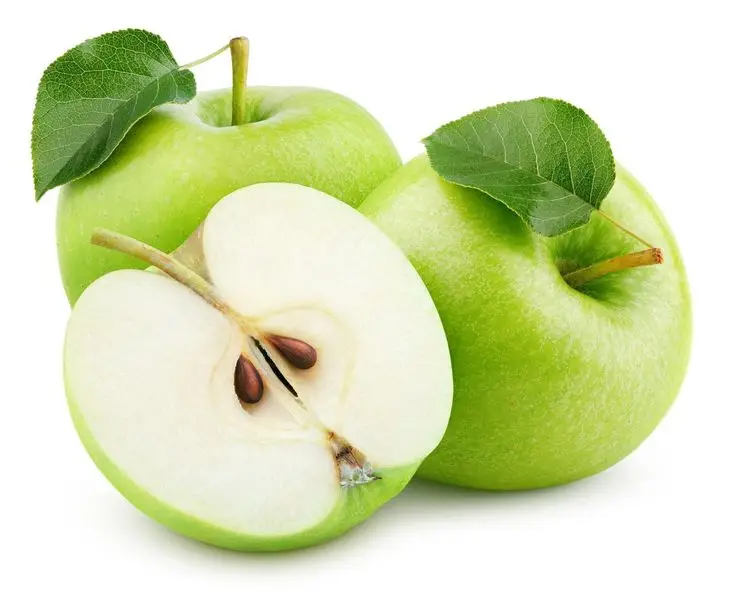
Description
🔍 Overview
-
Scientific name: Malus domestica
-
Origin: Australia (discovered in 1868 by Maria Ann “Granny” Smith)
-
Type: Dual-purpose apple (great for both fresh eating and cooking)
-
Color: Bright green skin, sometimes with a faint pink blush
-
Skin: Smooth, thick, slightly waxy
-
Flesh: Crisp, firm, and pale white
🥗 Taste & Texture
-
Taste: Sharp, tart, and refreshing with a subtle sweetness
-
Texture: Very crisp and dense, holds shape well when cooked
-
Flavor profile: Zesty and tangy, making it versatile for both sweet and savory dishes
🌱 Growing & Season
-
Season: Harvested in autumn (Sept–Nov) but widely available year-round
-
Climate preference: Thrives in warm climates with plenty of sunshine
-
Tree characteristics: Vigorous, heavy-bearing trees
🥕 Nutrition (per 100g apple)
-
Calories: ~57 kcal
-
Carbs: ~13g
-
Fiber: ~2.8g
-
Vitamin C: ~8% of Daily Value
-
Potassium: ~200mg
-
Low in natural sugars compared to sweeter varieties; good for low-calorie diets
📦 Storage & Shelf Life
-
Stores well for months under refrigeration due to firm flesh and thick skin.
-
Great for export and long-term storage.
🍏 Uses
-
Excellent for baking, pies, and tarts as they hold shape well
-
Adds a tangy bite to salads, smoothies, and savory dishes
-
Eaten fresh for a crisp, tart snack
-
Popular for juices and ciders due to high acidity
🌍 Fun Facts
-
Named after Maria Ann Smith, who discovered it growing from a seedling in her garden in Australia.
-
Known for being one of the lowest-sugar apple varieties.
-
Bright green color makes it a favorite for decorative fruit displays.
Reviews
There are no reviews yet.